DillonHarrington
I am a first-year mechanical engineering student at Northeastern University and a former captain and mechanical lead of FIRST Robotics Competition Team 467. I am seeking a summer 2027 mechanical engineering internship.
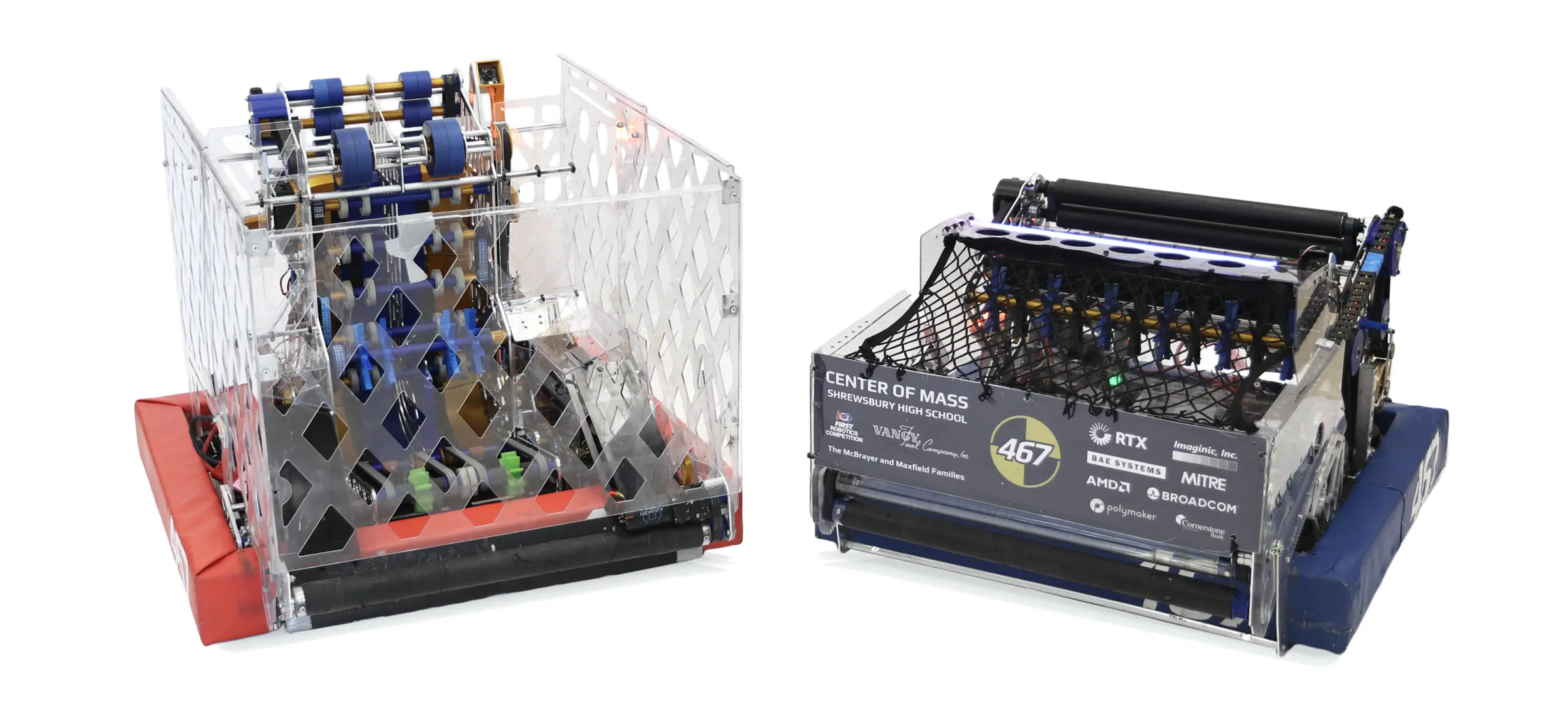
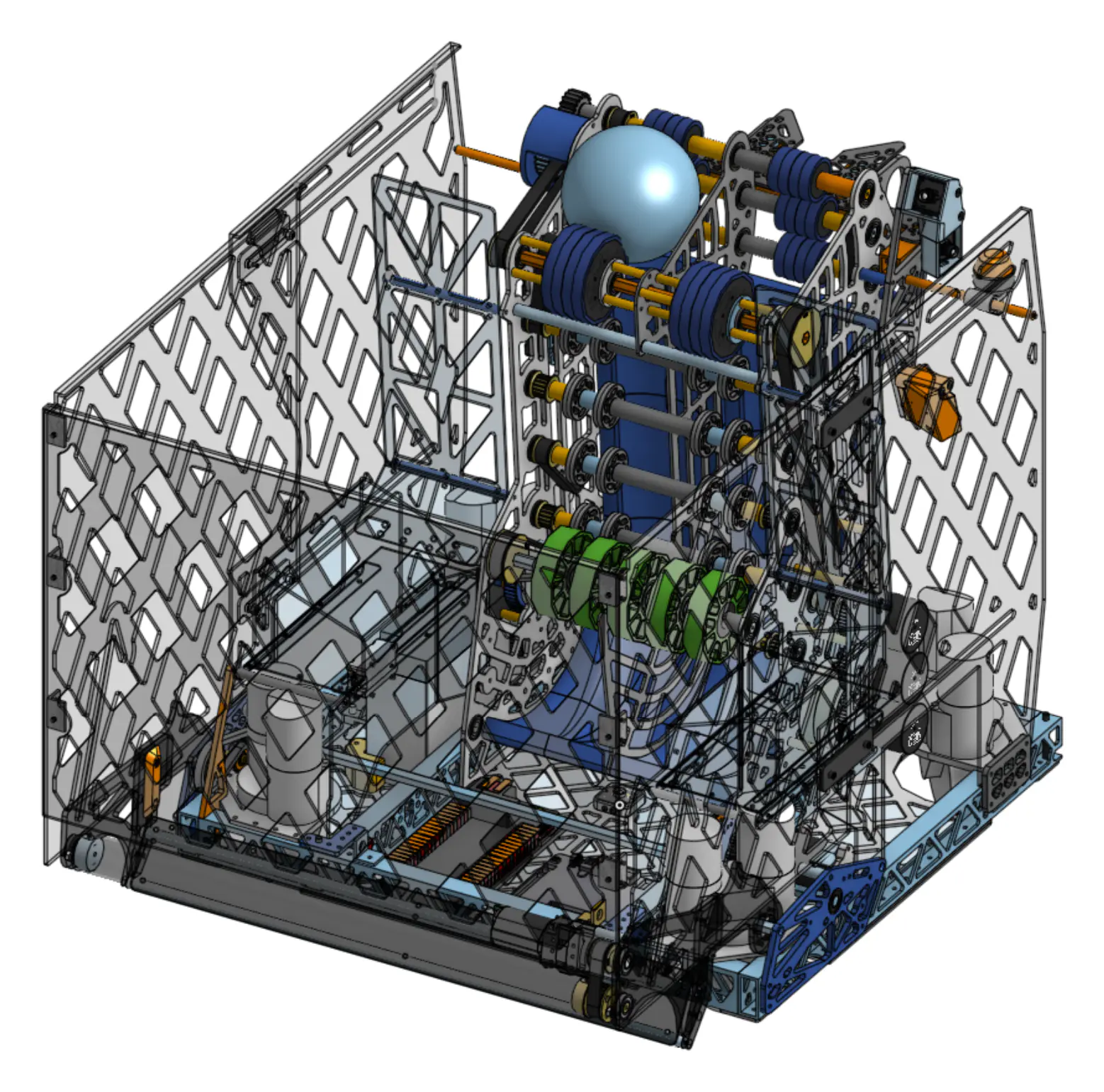
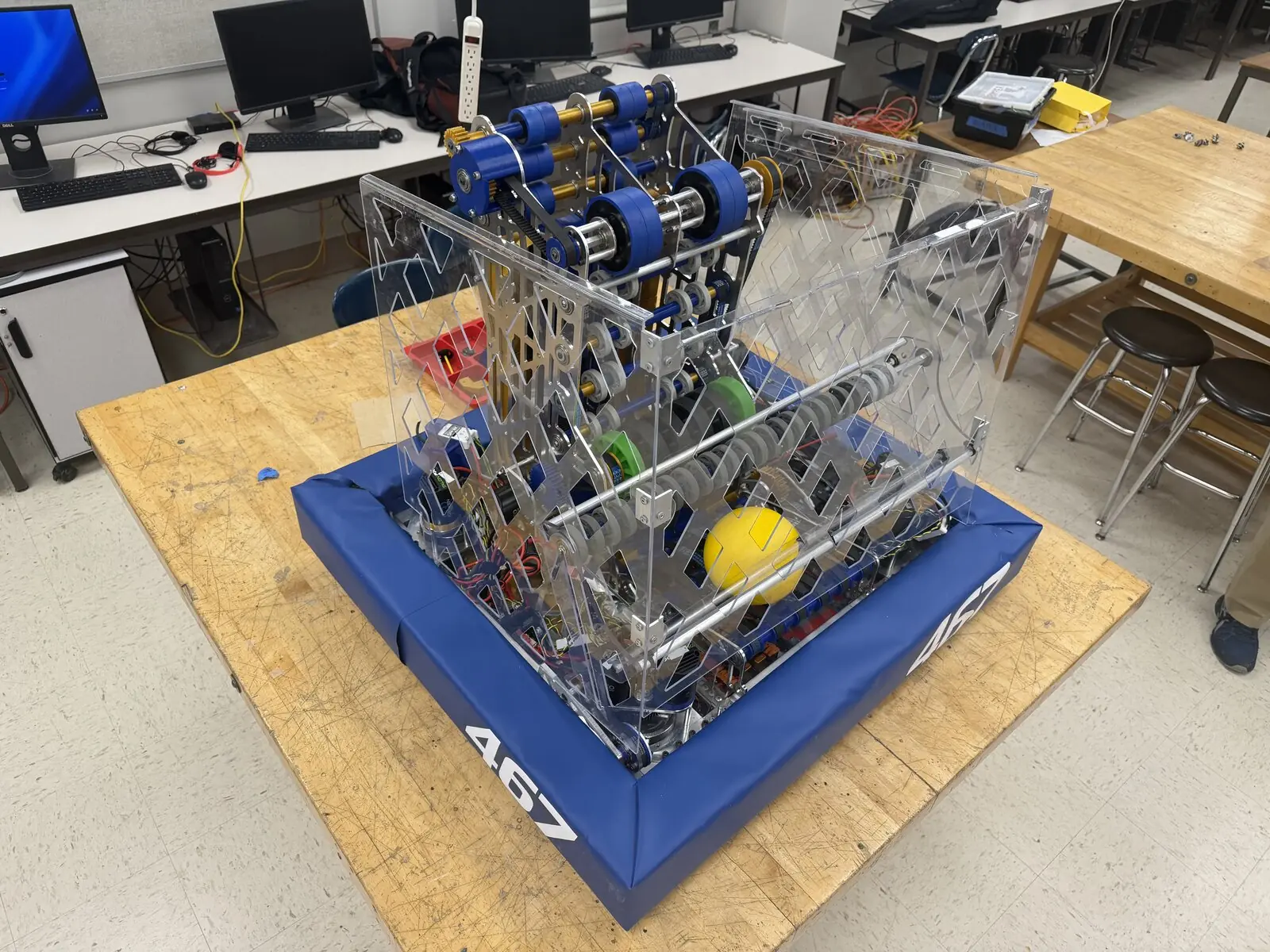
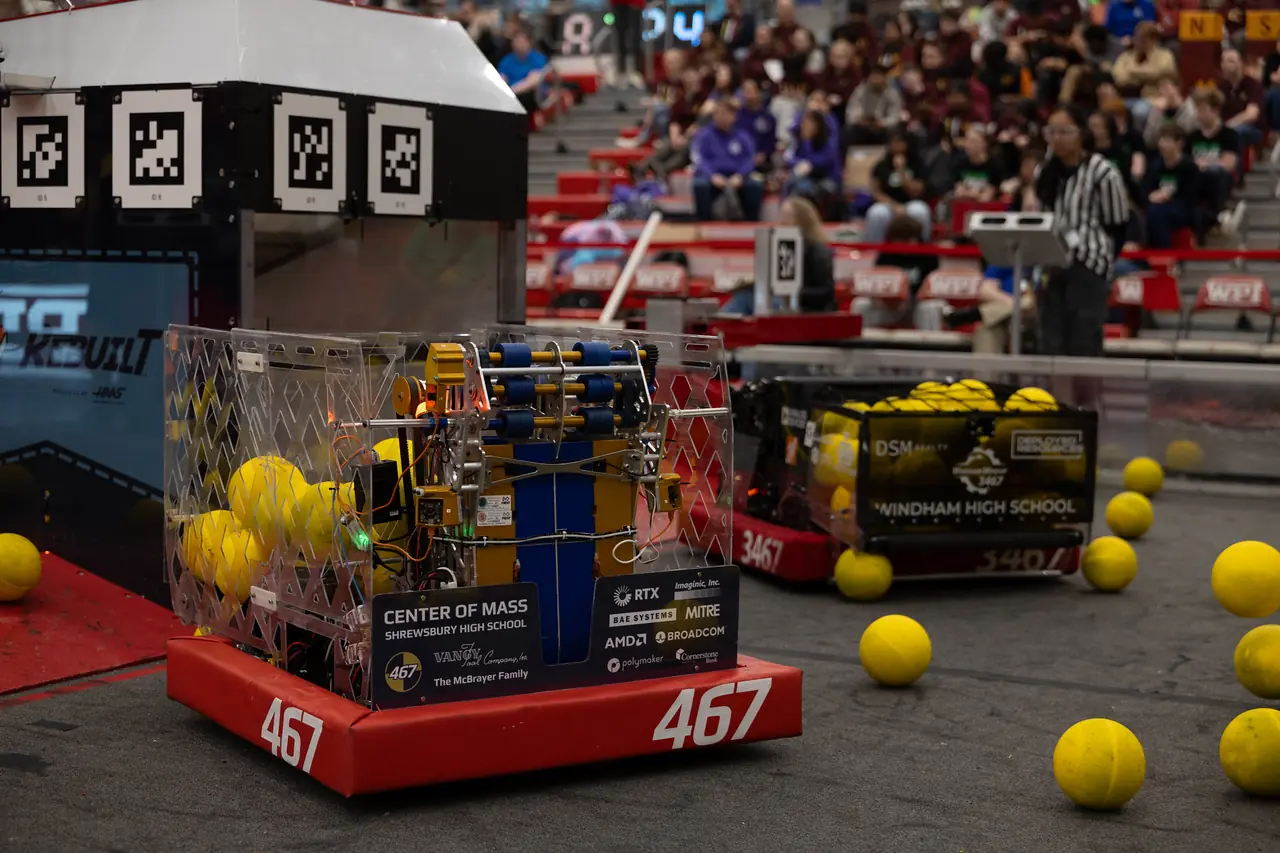
V2 robot redesign
- Year
- 2026
- Role
- Captain and design lead
- Scope
- 130 lb robot, 600+ parts
- Result
- Scoring rate up from 3 to 9 points per second
Our first robot of the 2026 season had a disappointing start at our first competition. It wasn’t reaching the scoring rate we had hoped for. I raised this concern with the team, and after deliberation, we decided to start work on a V2 robot.
While the team kept working on V1, I directed V2’s design. With minimal mentor involvement, I set its archetype with input and feedback from other team members, split the robot into subsystems, and assigned them to designers on the team. I ran design reviews for each subsystem and worked on each one myself, then approved parts and worked with the machining team to get them made.
V2 scored three times as fast as V1, at 9 points per second instead of 3. Across both robots that season, I designed and approved over 300 unique custom parts.
V1 shooter
- Year
- 2026
- Role
- Sole designer
- Scope
- 80 unique parts
- Methods
- Parametric CAD, motor sizing from power calculations, launch-distance model
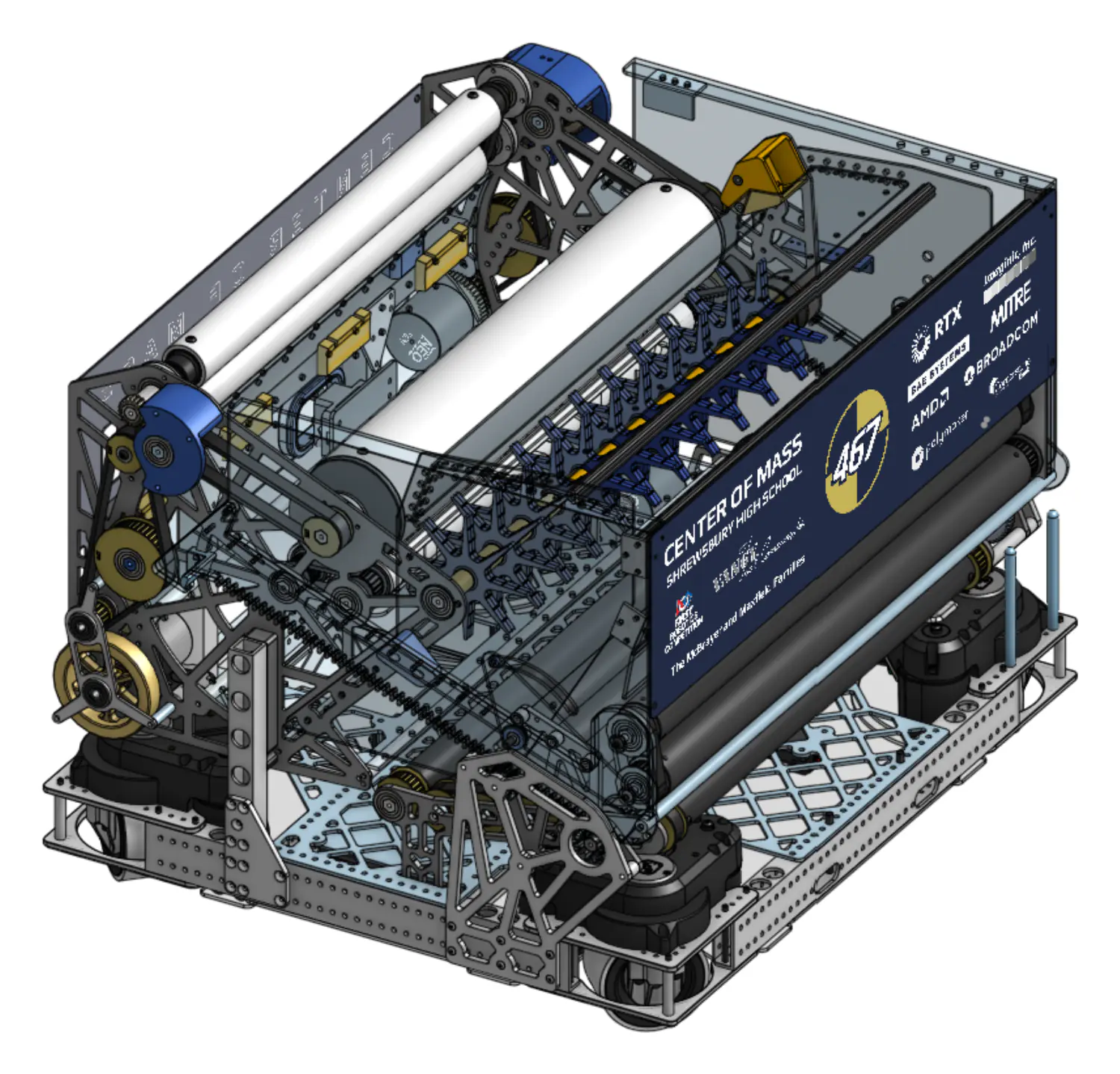
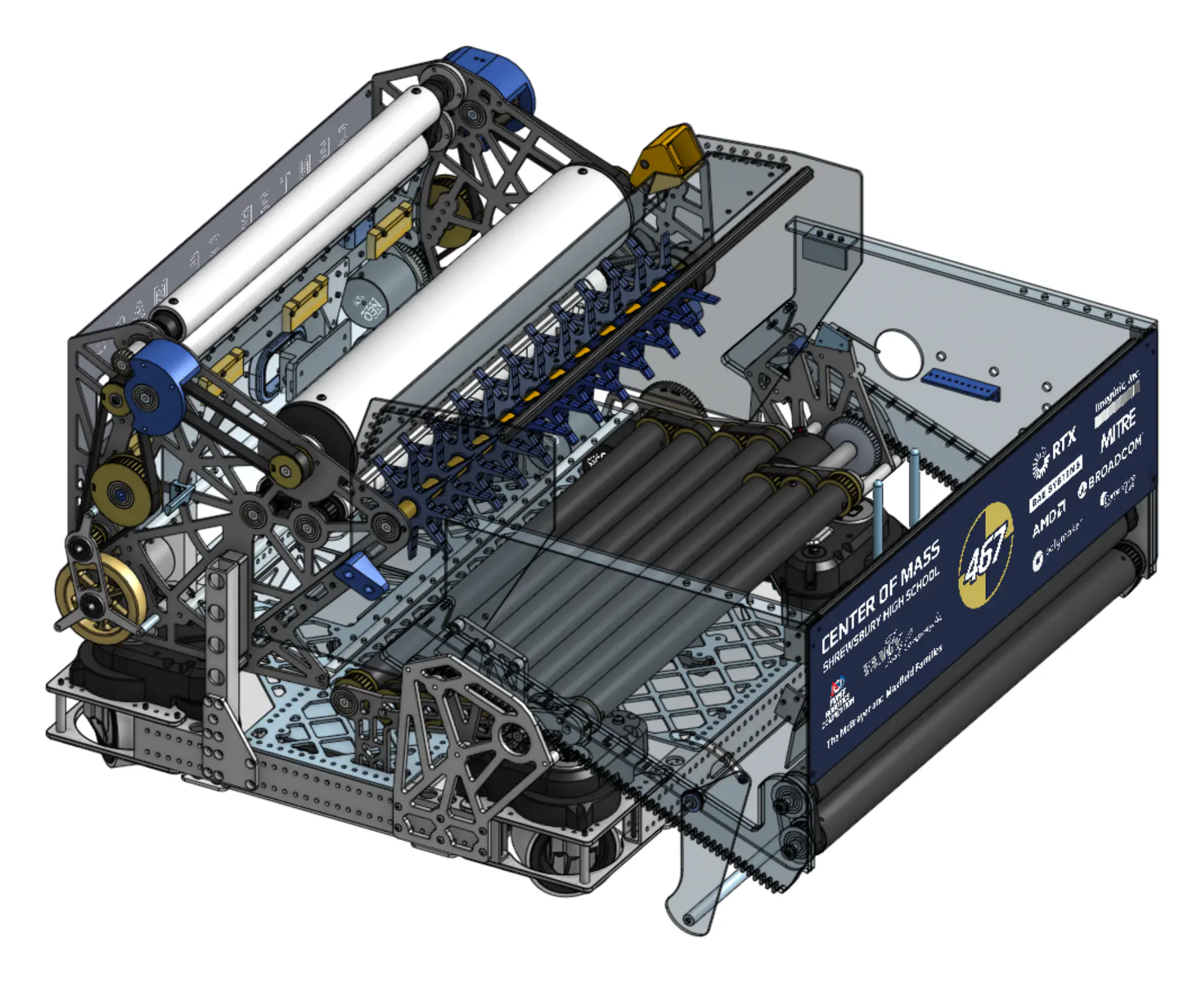
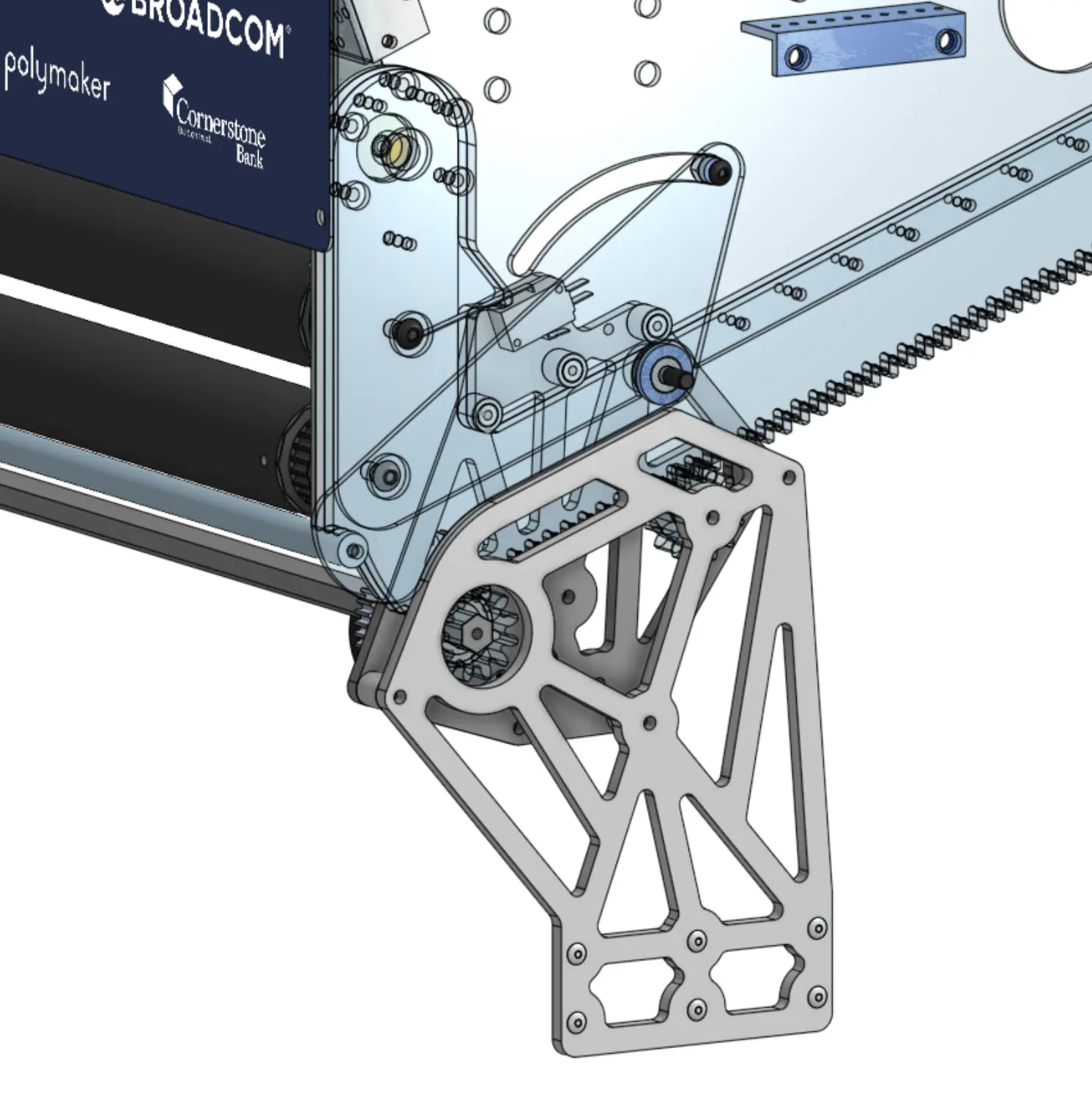
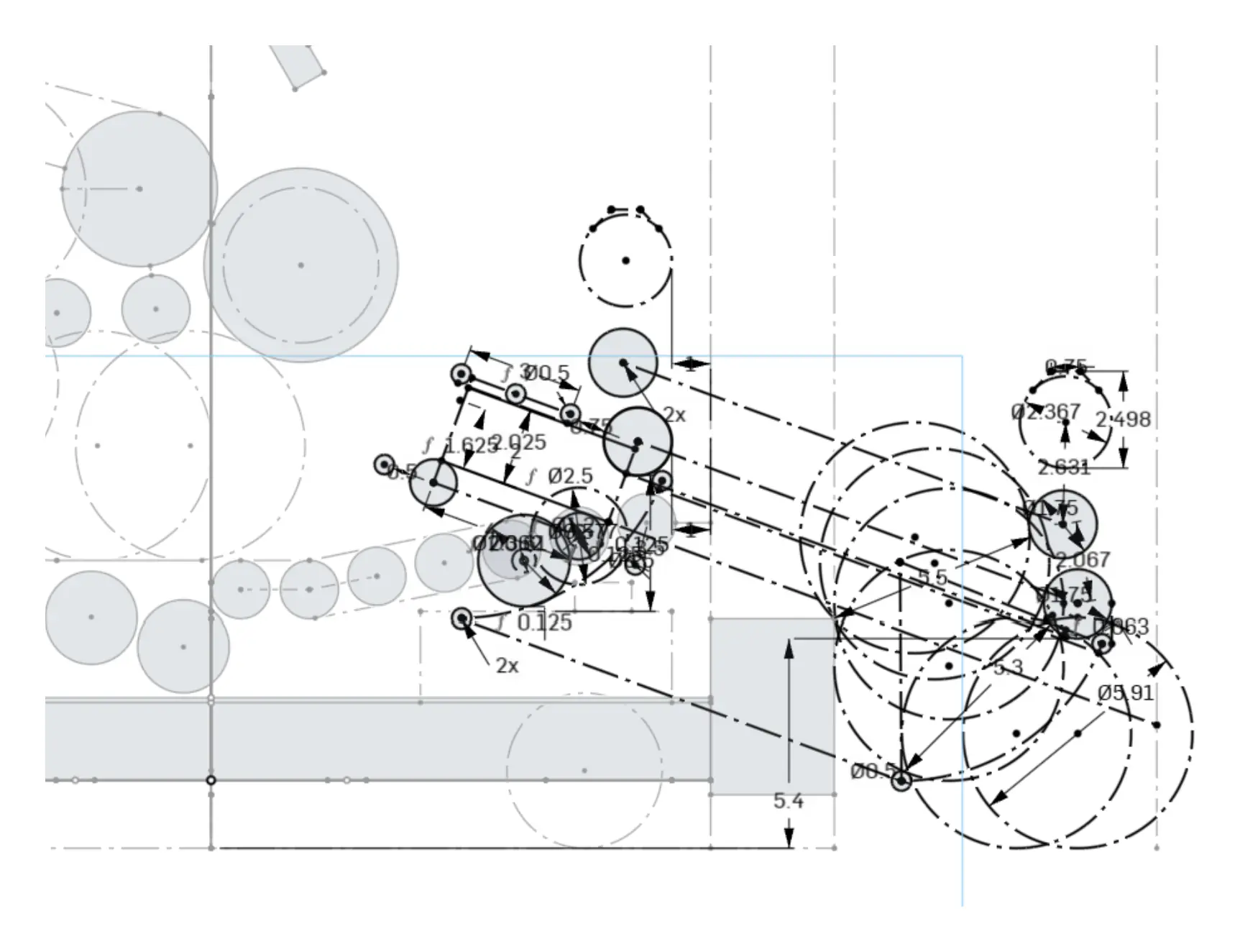
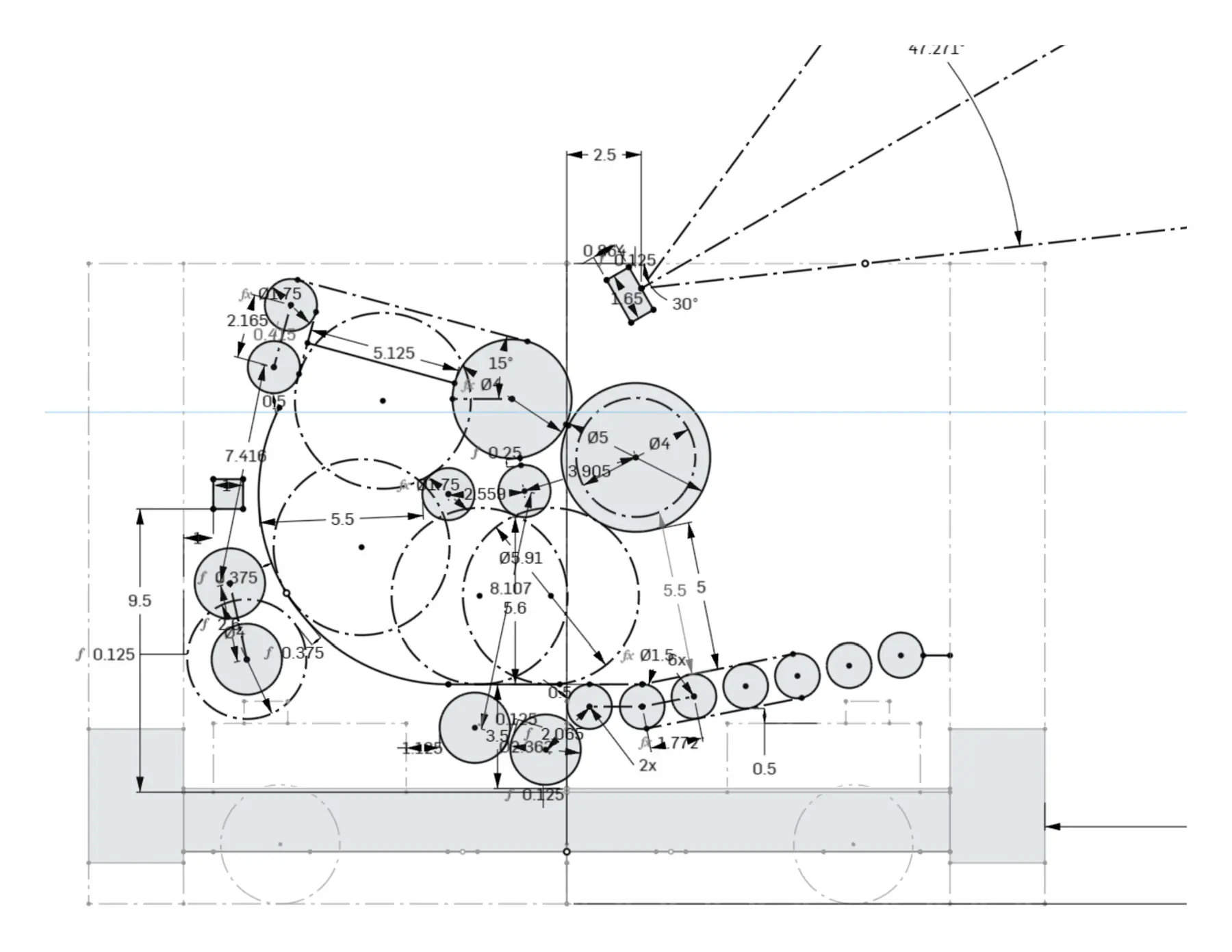
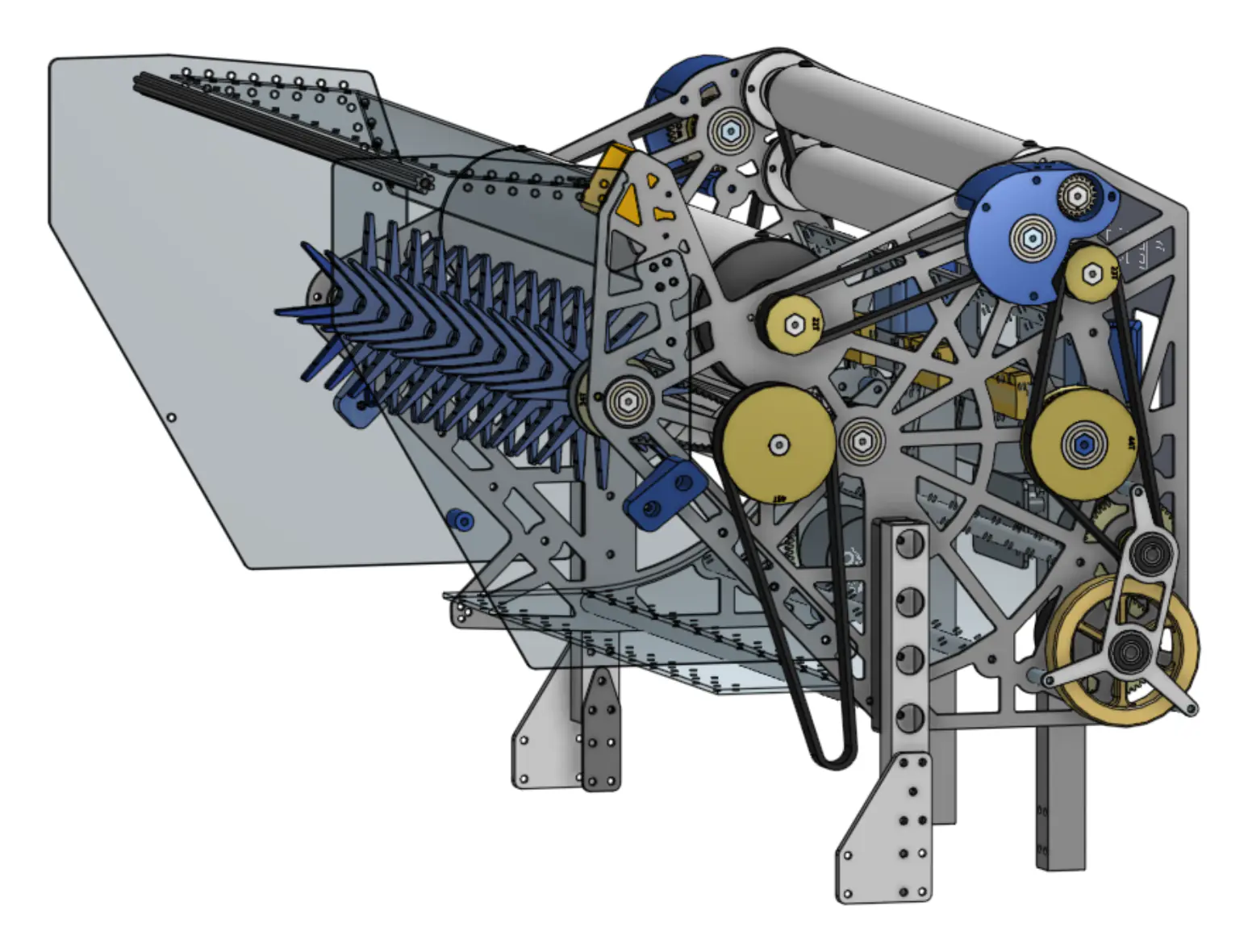
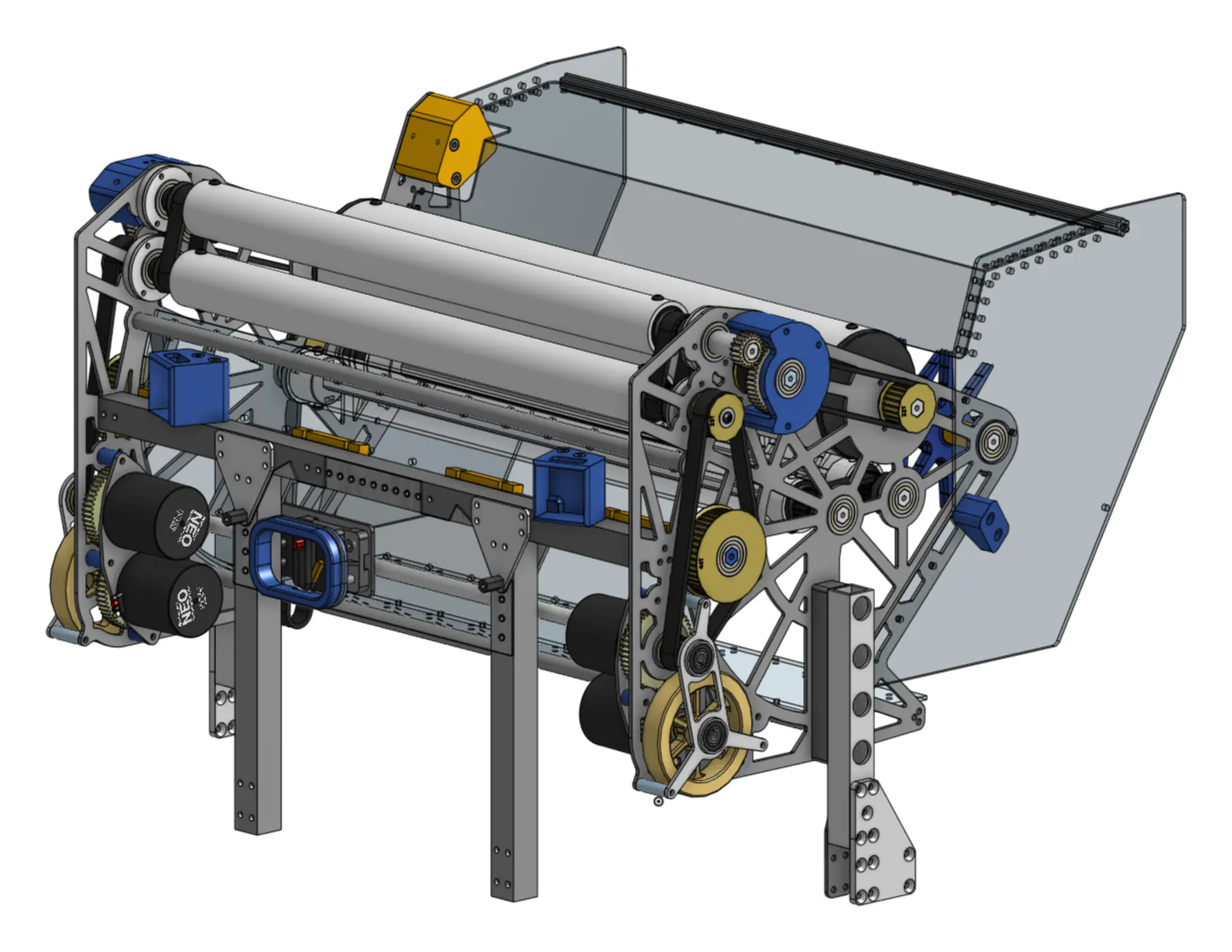
The shooter on our first robot of the 2026 season was its most complex subsystem, with 80 unique parts, and it was entirely my design.
I modeled it parametrically so design changes could be made very quickly, since things can change very fast and flexibility is a must. I used power calculations to size the motors and find how many we would need, and I even built a model within the CAD that showed the predicted launch distance from the motor specs and launch angle, so the team could visualize different setups.
Concrete-filled lathe
- Year
- Summer 2026
- Role
- Designer
- Goal
- An open-source lathe anyone could download, 3D-print, and build cheaply
- Status
- Unfinished: planned, most of the CAD done, parts sourced
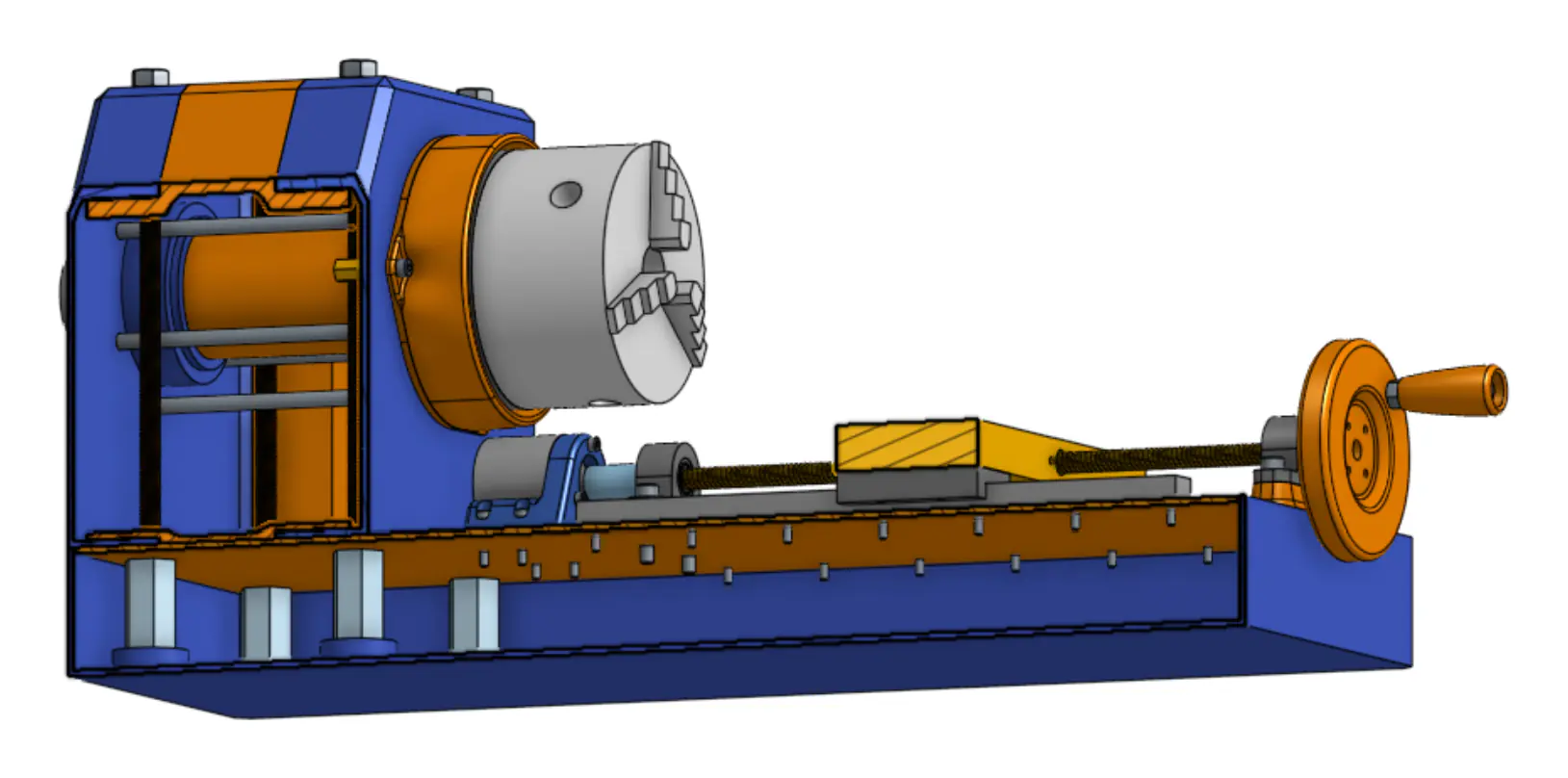
Parts made on a lathe are very important for building FRC robots. These machines make parts like standoffs and shafts, which are integral to most designs. Unfortunately, the lathe was one of the team’s biggest bottlenecks, since making parts on it is rather slow and we can only make one at a time.
My idea to solve this was an open-source lathe that anyone could download, 3D print, and build from cheap materials. It would have a 3D-printed body, filled with concrete and reinforced with aluminum for stability.
While I didn’t complete the project, I got about halfway. I planned the build, finished most of the CAD, and even sourced the parts online from different sellers and modeled them into the CAD.
Elevator and end effector
- Year
- 2025
- Role
- Designer
- Scope
- Elevator and end effector
- Season
- Reached the World Championship, the team’s first in 8 years
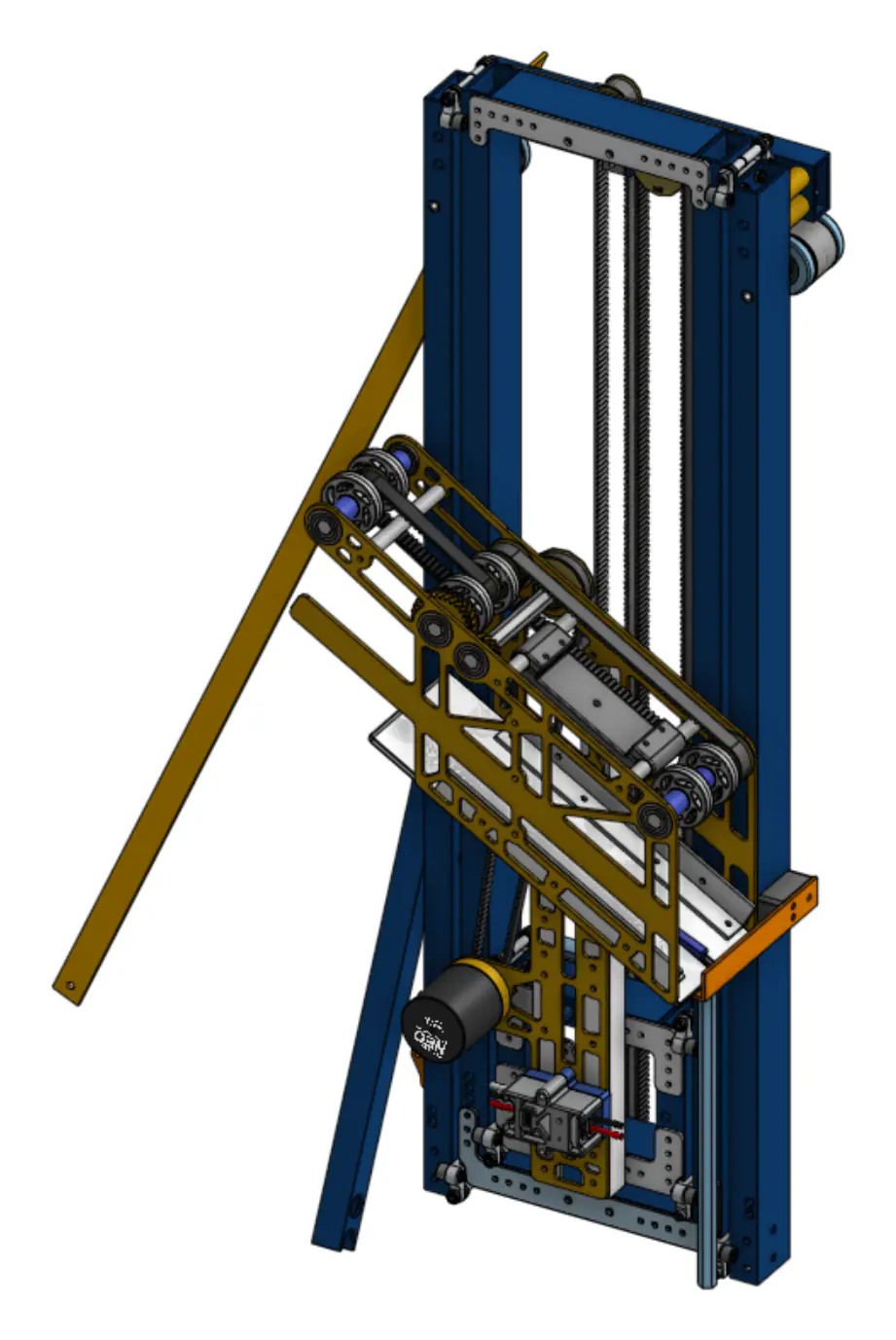
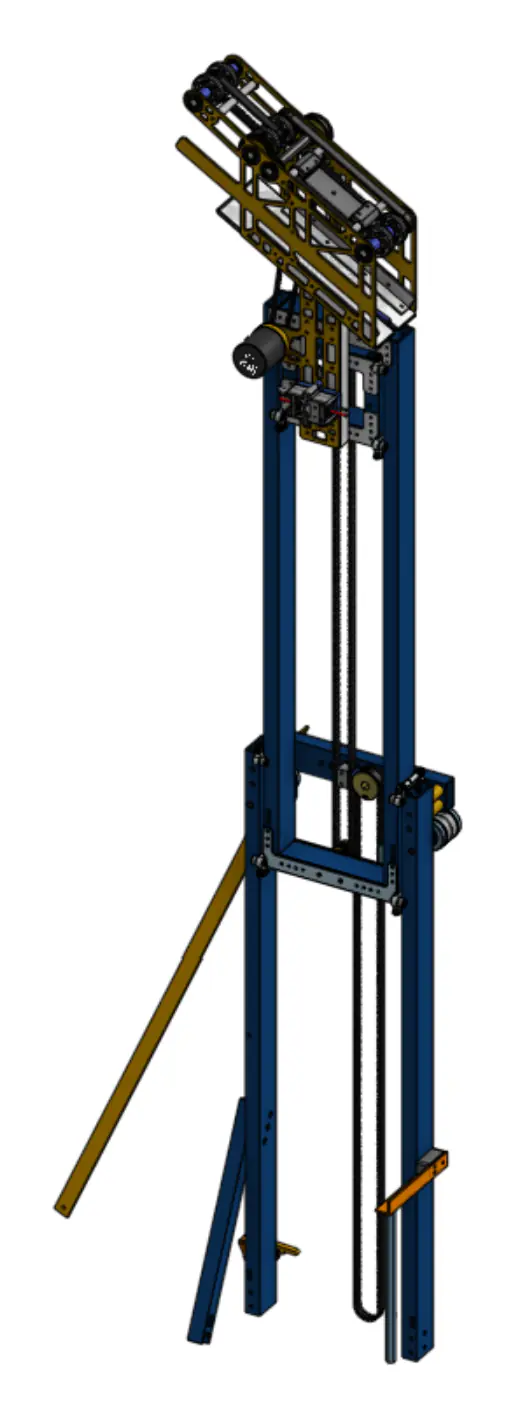
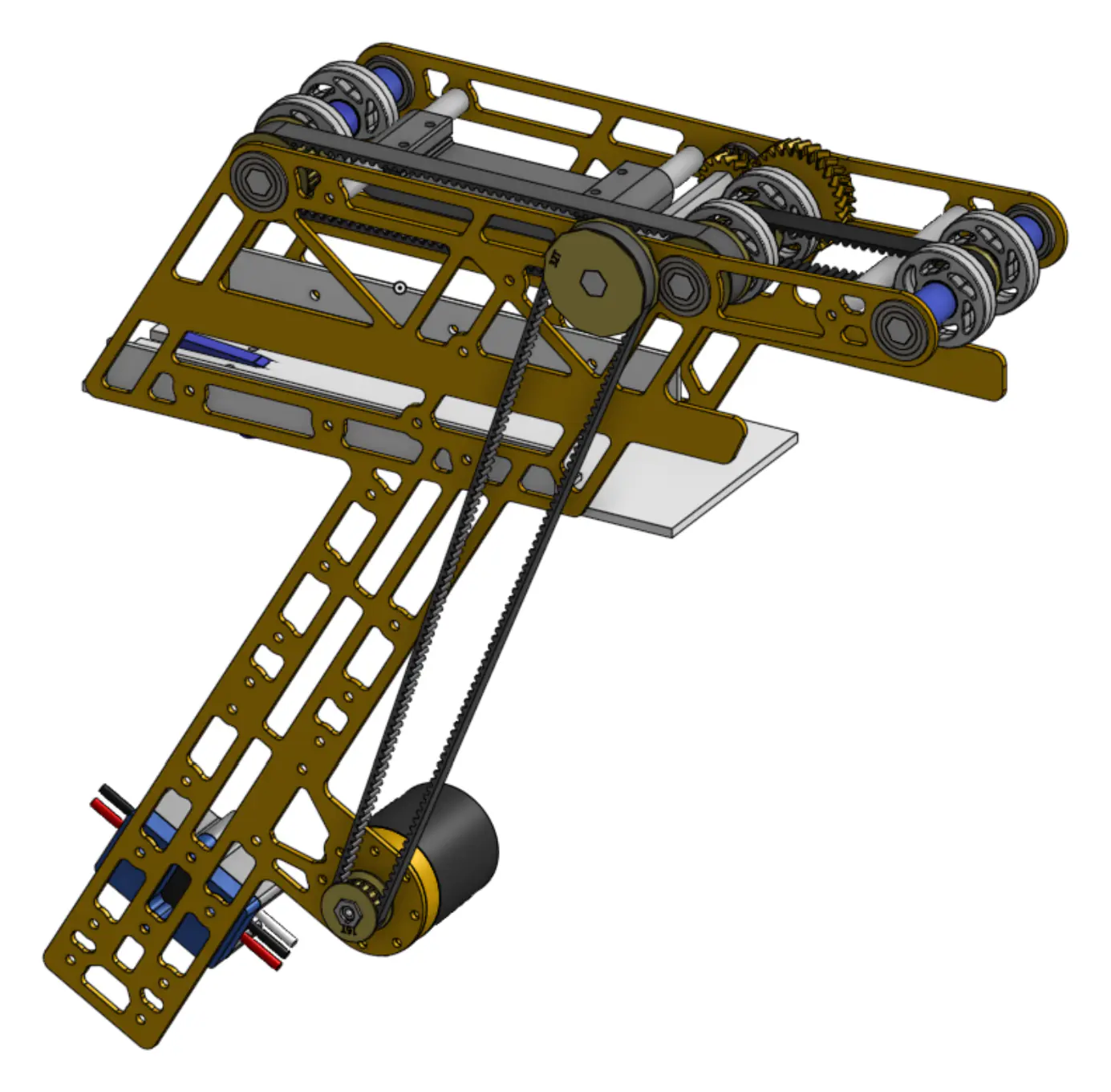
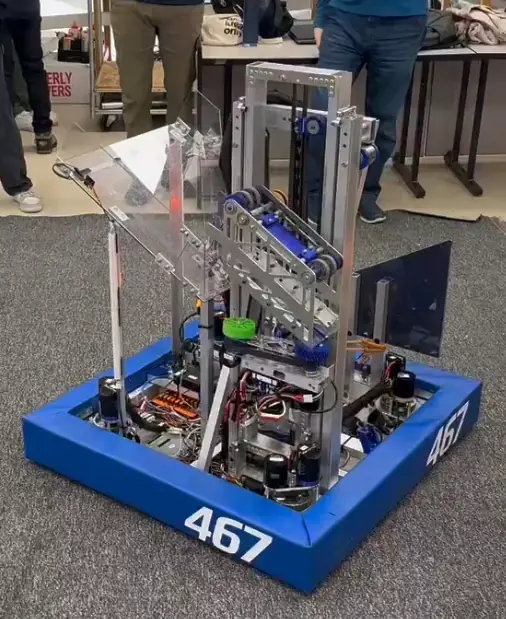
For the team’s 2025 robot, I designed the elevator and the end effector. The elevator is the mechanism that lifts and lowers the end effector, and the end effector grabs and holds game pieces for scoring.
This robot was very successful and took the team to the World Championship for the first time in eight years. I also led the physical assembly of the final competition robot, which I did three years in a row: 2024, 2025, and 2026.
Driver station console
- Years
- 2023–24
- Role
- Designer and builder
- Tools
- Fusion 360
- Status
- In use since the 2025 season
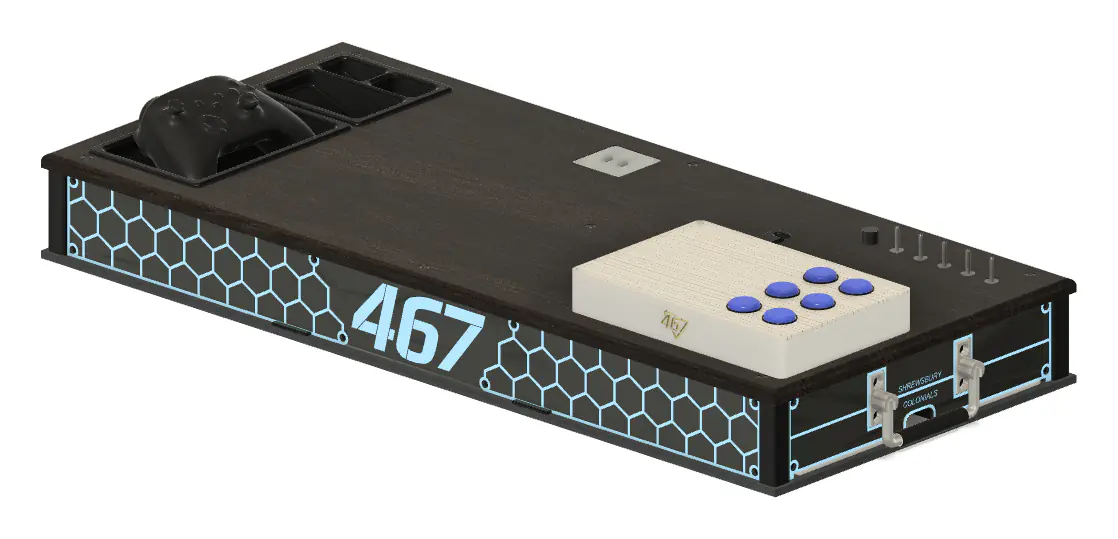
As the team’s driver, I used the driver’s console every match, yet it was one of the weakest parts of our setup. It was simply a plank of wood with door-hardware handles and a tangle of wires, and the controller would often fall off while moving the console.
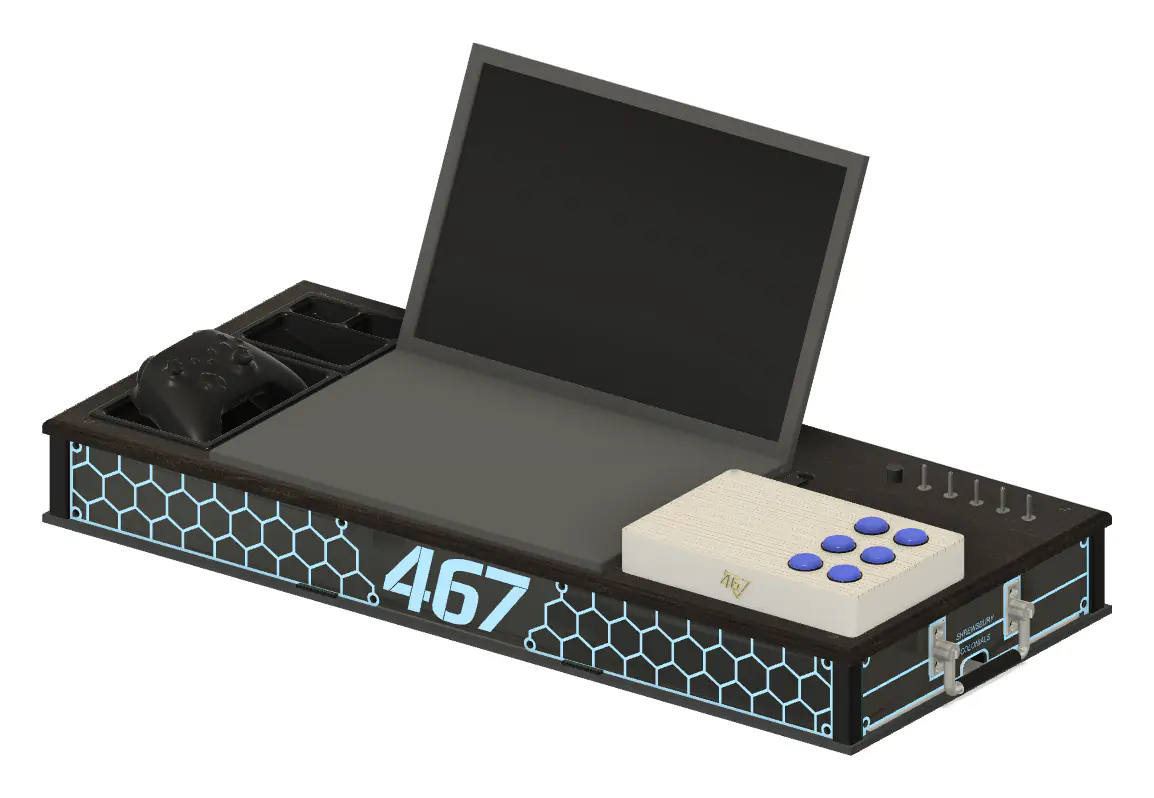
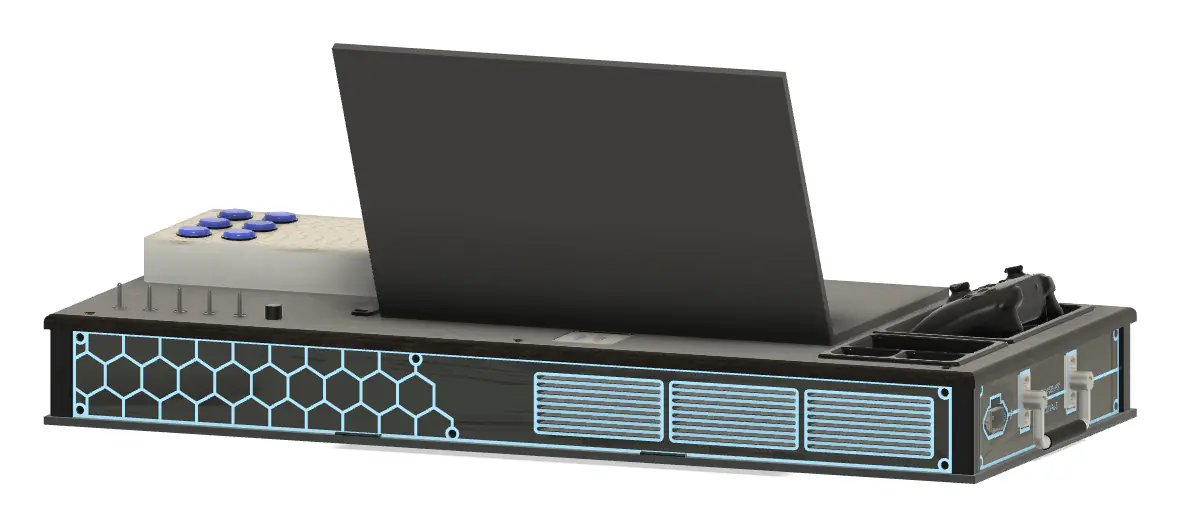
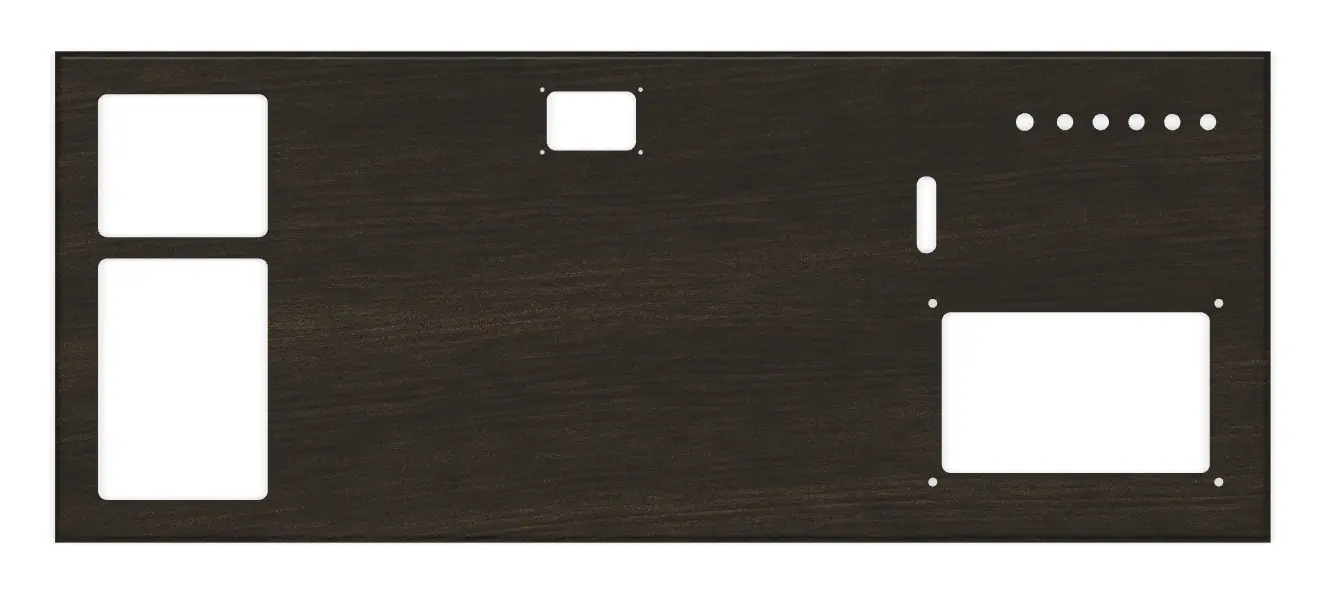
To solve this, I decided to design a custom driver console for the team. I began with requirements, separating must-haves from nice-to-haves, and then designed it in Fusion 360. I built in:
- Folding handles
- Tool and marker storage
- Whiteboard storage
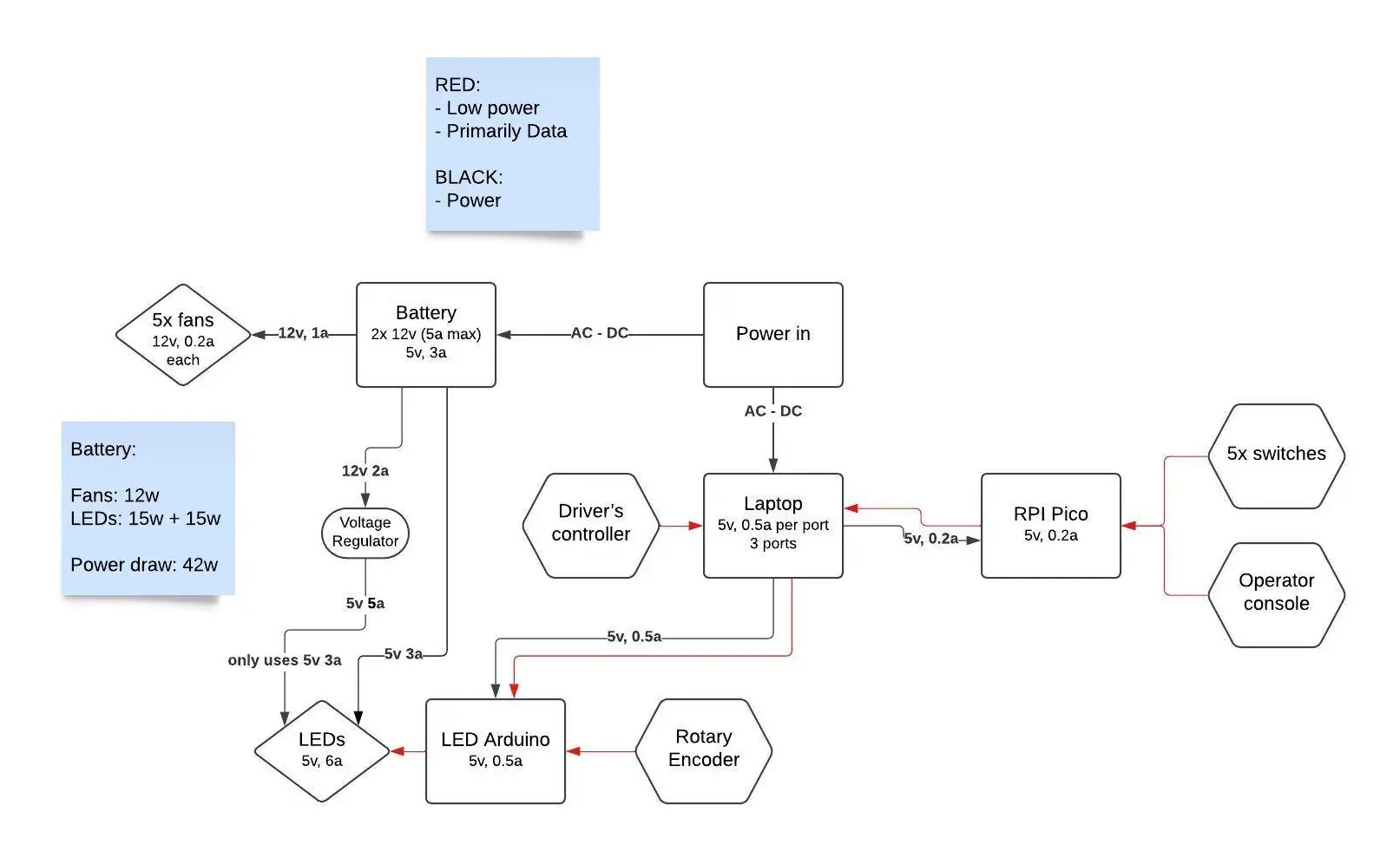
- Extra operator controls powered by a RPI Pico
- Cooling fans for the internal components
- Wraparound LEDs
- A battery to power the LEDs and inner workings
- An external AC power port for charging everything inside
I pitched the design to the team’s head mentor, then built and finished it just in time for the 2025 season, when we made it to the World Championship. The team still uses it to this day.
About
I’m studying mechanical engineering at Northeastern University (B.S. expected May 2030). At Shrewsbury High School, I was captain and mechanical/CAD lead of FIRST Robotics Competition Team 467, a 68-member team, and was an FRC Dean’s List Semi-Finalist in 2025.
I design with manufacturability in mind, whether a part will be made on a CNC router, vertical mill, lathe, or 3D printer, and I’m able to make technical drawings for the people running the machines. I’ve also machined parts on the vertical mill and used 3D printers myself.
I also ran a car detailing business for all four years of high school, serving nearly 100 cars, and built a custom website for it from scratch: DillonsCarDetailing.com. I ran it solo, taking on customers and completing the jobs myself.
- CAD
- Onshape, Fusion 360, Inventor
- Fabrication
- 3D printing, vertical mill, soldering; design for CNC router, lathe, and laser cutting
- Electronics
- Power system and wiring planning, motor sizing, Raspberry Pi Pico prototyping
- Design
- Parametric design, design for manufacturability, technical drawings, design reviews, rapid prototyping
- Software
- Excel, Google Sheets, Python (basic)